

Recently, I’ve noticed that a lot of the media I’ve been consuming – things I’ve read, videos I’ve watched, even ads I’ve heard – have adopted this really, really strange sentence structure.
There’s nothing specific to it that I can put my finger on. And there’s nothing inherently incorrect about it. But, there’s just this sense that each string of words is more soundbite than sentence.
From Instagram reels to the descriptions under YouTube videos, every sentence is loaded with buzzwords, jargon, and platitudes, creating the appearance of a philosophical truth while carrying no substance or decipherable meaning underneath.
To some degree, the phenomenon appears to stem from the now-popular AI sentence structures of negating a statement, then offering an alternative. “The solution doesn’t lie in doing X. It’s found in rediscovering Y.”
Part of it is the emphasis we place on maximizing consumption as a society, as we explored last week. But, I think the core of the issue is our efforts to maximize productivity in everything we do.
After all, if much of the day-to-day writing we do can be done in great part by AI, what is the need for creativity or innovation? And so, our work contains more and more of these strangely structured sentences.
Then comes the writing and sentence-construction we don’t necessarily need to do, but we do anyway – captions on posts, dialogues in reels, so on and so forth. Even if we don’t use AI for these tasks, it is still in our best interest (and the best interest of our highlight reels) for us to craft catchy sentences that hold the promise of meaning.
This phenomenon translates into the nature of, really, everything we do.
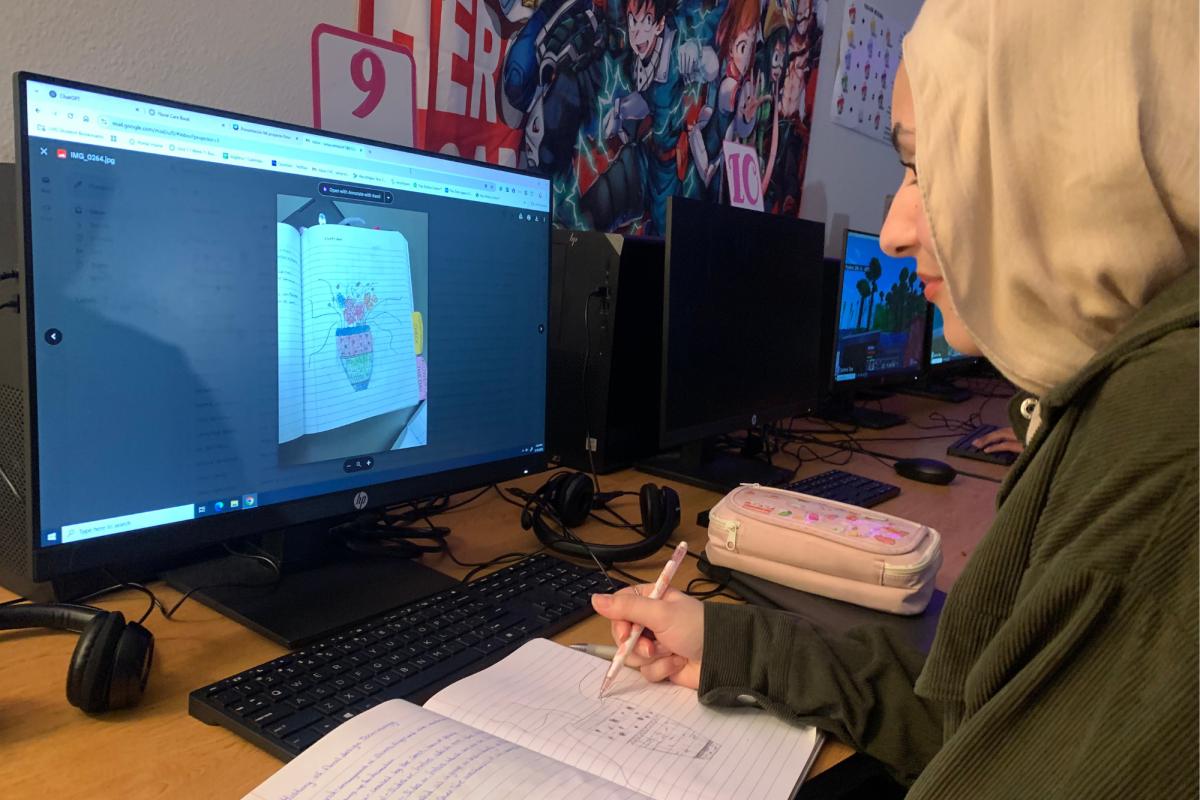
Why design your own journal layout when you could find an aesthetic one on Pinterest and just copy that? Why mess around and come up with your own crochet pattern through trial-and-error when you could just watch a YouTube video? Why experiment in the kitchen and adjust the flavors as you go when you could just read off an online recipe, word-for-word?
We don’t perceive these tasks as important – or rather, we don’t perceive them as worthy of investing more time than absolutely necessary. So, we don’t; we follow the prescribed routine and get there as fast as possible.
If you know that a certain formulaic, clickbaity sentence structure works, and that it attracts views, why use something else? If that journal layout looks pretty and makes space for everything you need, why sketch out a hundred of your own designs? If thousands of people on the Internet swear by a certain recipe, why bother coming up with your own?
In our quest for efficiency and peak productivity, we’ve seemed to have forgotten that there’s More to our Stories than tasks checked off a to-do list and targets achieved. And as a result, the art we’re making, the goals we’re achieving, the sentences we’re writing feel strangely hollow.
Making art is as much about the process as it is the finished item. Trying to achieve a goal isn’t just about doing something; it’s about everything you did to grow and improve along the way.
Creating something and working towards something, especially something we don’t have to do, especially a hobby or a personal goal, is about making memories and a meaningful experience for ourselves. If we rob ourselves of that opportunity for the sake of getting stuff done, what’s even the point?
So the next time you sit down to do something, do it because you want to. And treat it like something you want to do. Not because you have to, not because it’s productive, not because it’ll be good for you.
But because it adds More to your Story of yourself.