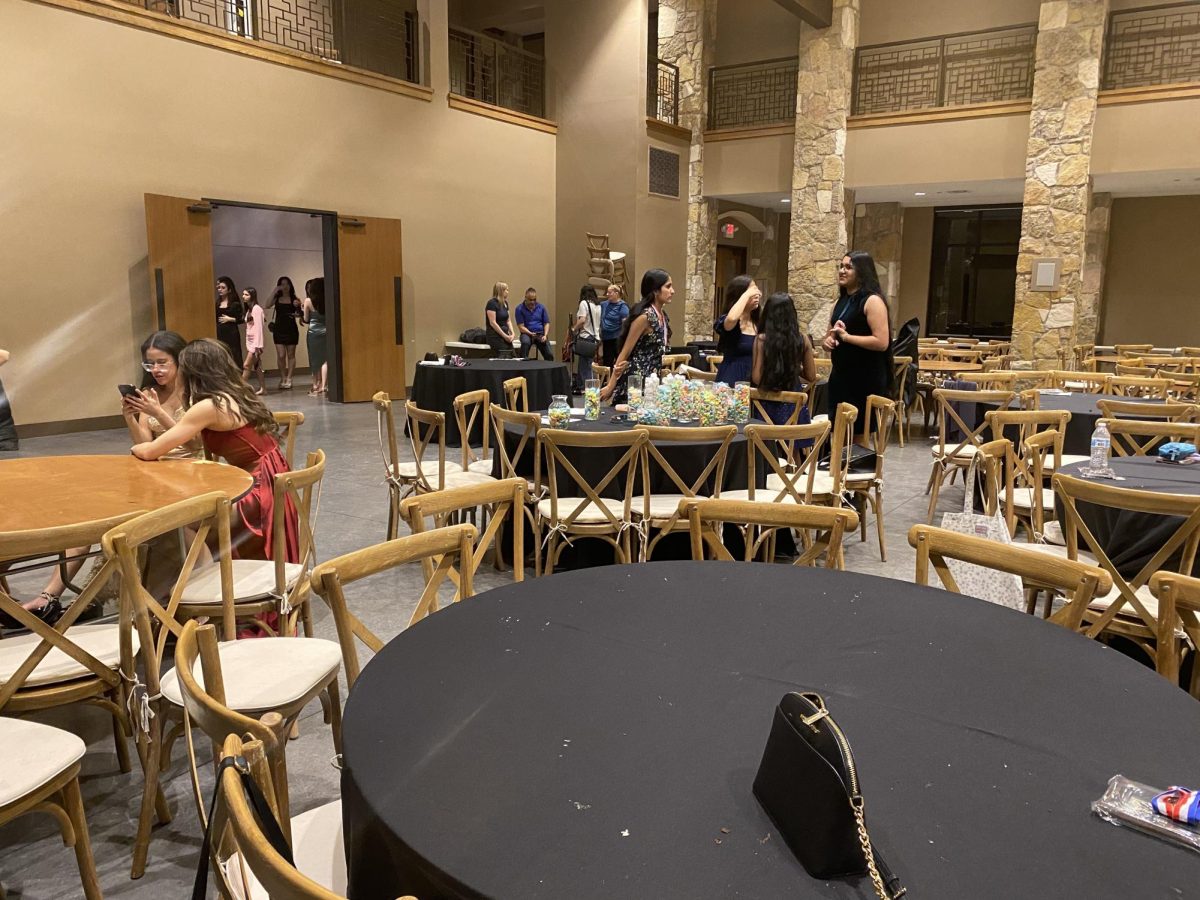


A crowded game full of excitement and fervent school spirit, a dance, a dinner, and photos to document it all. They might all be things that are used to define homecoming (HoCo), but in recent years, forgoing the dance has appeared as a steadily increasing trend.
Originally, homecoming used football games to bring college alumni back together. Today, since its spread to high schools in the 1920s, homecoming has been a long established high school tradition for nearly a century. However, it’s not resistant to changing trends.
Beyond fashion and music, how students spend their homecoming has changed over the years. A 2023 YouGov poll surveying 1,000 U.S. adult citizens found that 88% of survey participants 45 and older slow danced, compared to 78% of 18–44 year olds. Additionally, 72% of 18–44 year olds attended an after-party, compared to the 51% of those who are 45+, who did the same.
With the changing trends in activities, what is it that makes HoCo, HoCo? The “point” of HoCo might differ from person to person, but some students can focus on the aspects that define HoCo for them—the parts that make going, worth it—when they choose to instead participate in NoCo.
“NoCo”, meaning No Homecoming, is a term for the students who skip the homecoming dance but still do something else to celebrate the tradition. After all, one commonality that the poll found was that a highlight of homecoming for many was that it is an opportunity to socialize with friends. This can be done in many different settings. You don’t need a dance to facilitate this socialization, just friends. Because of this, for some, the dance isn’t preferable, or just isn’t necessary.
Whether students don’t find the cost of homecoming worth it or it’s simply not for them, there are a variety of reasons for skipping the dance. Instead, students might get dressed up to take pictures and go out to eat, just attend the game, or skip it entirely.
Conversations about homecoming in the halls might seem to fade, and questions of “what’s the point?” may grow more prominent. That doesn’t, however, mean going to HoCo shouldn’t be for anybody. Instead, everyone’s ideal HoCo—regardless of if it includes a game, dance, dinner, pictures, or none of the above—might look a little different, and that’s fine.
Traditions don’t necessarily have to be followed to a tee every year. There’s value in their constancy, but the world isn’t cookie-cutter and our traditions should reflect that, changing with the years to suit its participants. Homecoming is a night for students to enjoy, and this shifting trend away from attending a school dance and a redefining of what HoCo is, isn’t necessarily a bad thing.