
For generations, Dec. 7, 1941 is a day of infamy.
It’s the day Japan launched a surprise attack on the United States naval base at Pearl Harbor, Hawaii.
The death toll: 2,043.
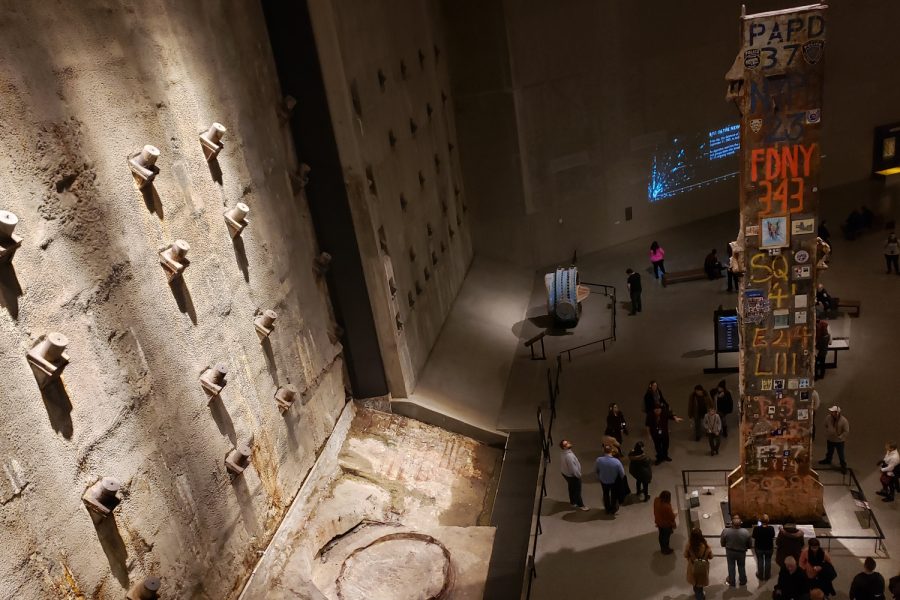
For many staff members on campus, Sept. 11, 2001 is its own day of infamy.
It’s the day terrorists hijacked four planes that changed the skyline of New York City and left a scar on the soul of America.
The death toll: 2,977.
But for students on campus, 9/11 isn’t their reality: it’s a social studies lesson.
“I remind myself that for students, 9/11 isn’t part of their memory, it’s history to them,” AP World History teacher Jeff Crowe said. “For people who lived through it, the emotions are still raw. For students, it can just seem like another event in the textbook. My challenge is making it feel real without overwhelming them.”
In the classroom, there are many things for students to take away.
“Prior to this point, we had not had a physical attack on the United States since the War of 1812, which is a long time,” GT American Studies teacher Whitney Schell said. “That sense of safety has kind of been shattered, and understanding the effects of that.”
For GT Humanities teacher Sarah Wiseman, reflecting on 9/11 allows students to understand similarities around the world.
“As far as culture and community goes, we are more alike than we are different and just trying to lean into those commonalities,” Wiseman said.
Looking back on the tragedy, it is clear 9/11 not only affected the United States, but played a role on the global stage.
“It is important for students to learn about the effects of 9/11–how it is going to shift not only our domestic policy as well as our foreign policy,” Schell said. “It will be the catalyst to a series of wars in the Middle East, which are still going on.”