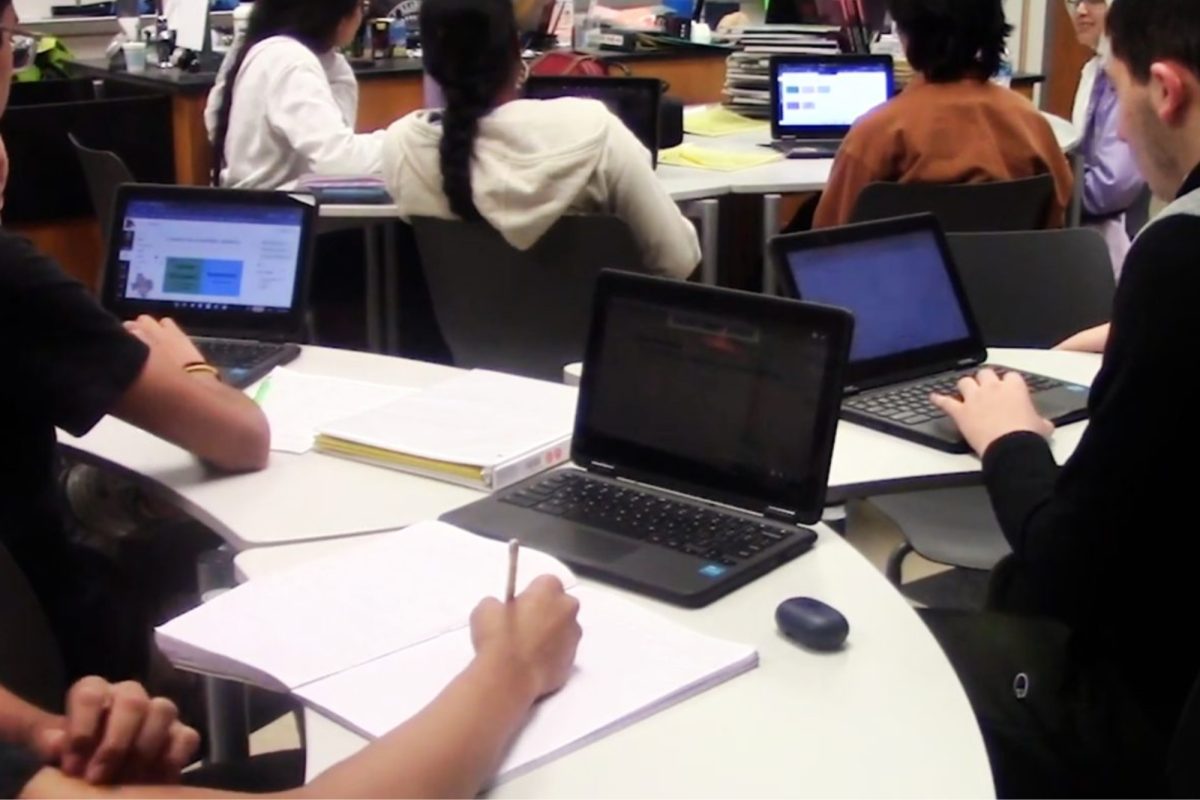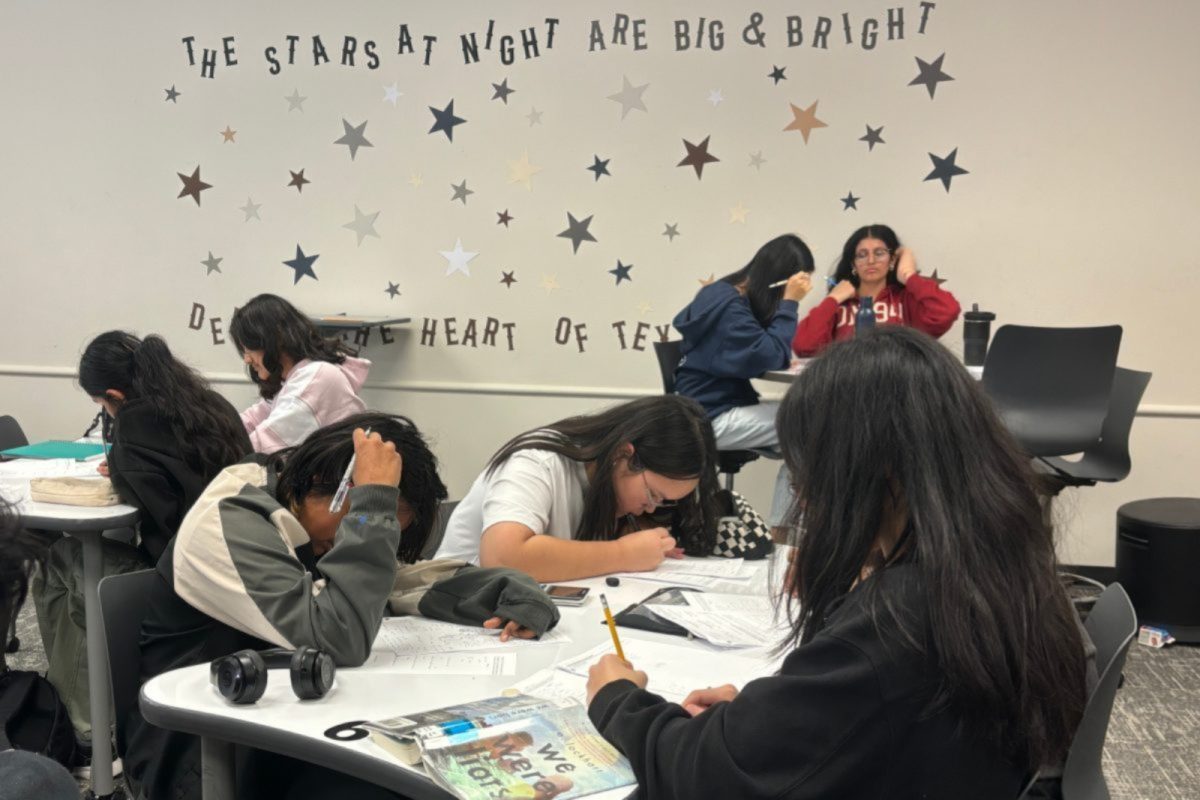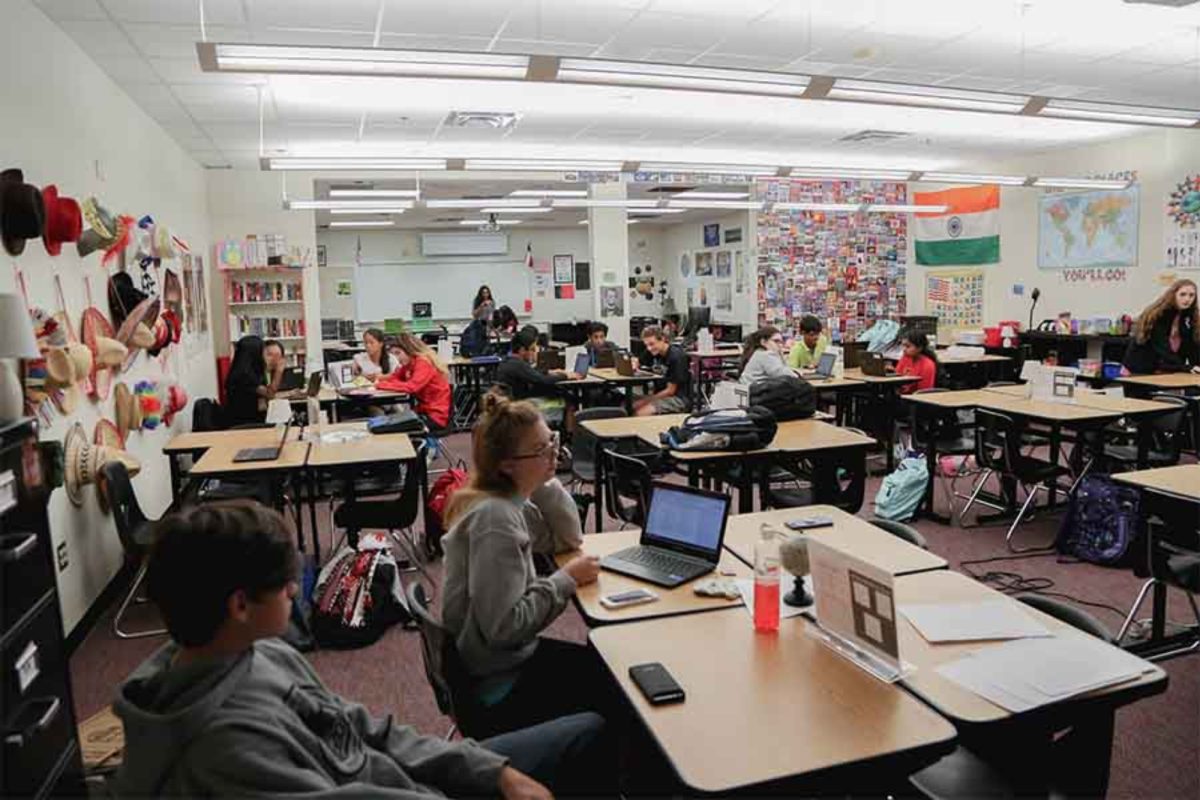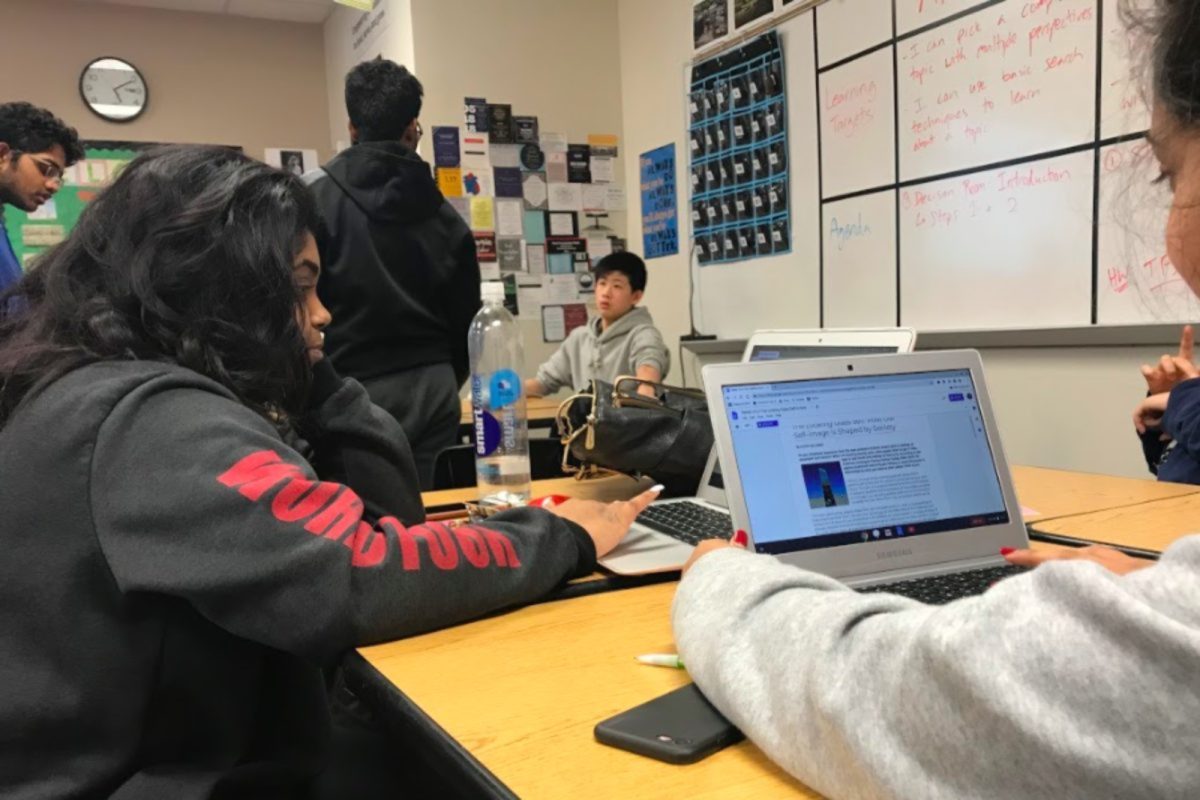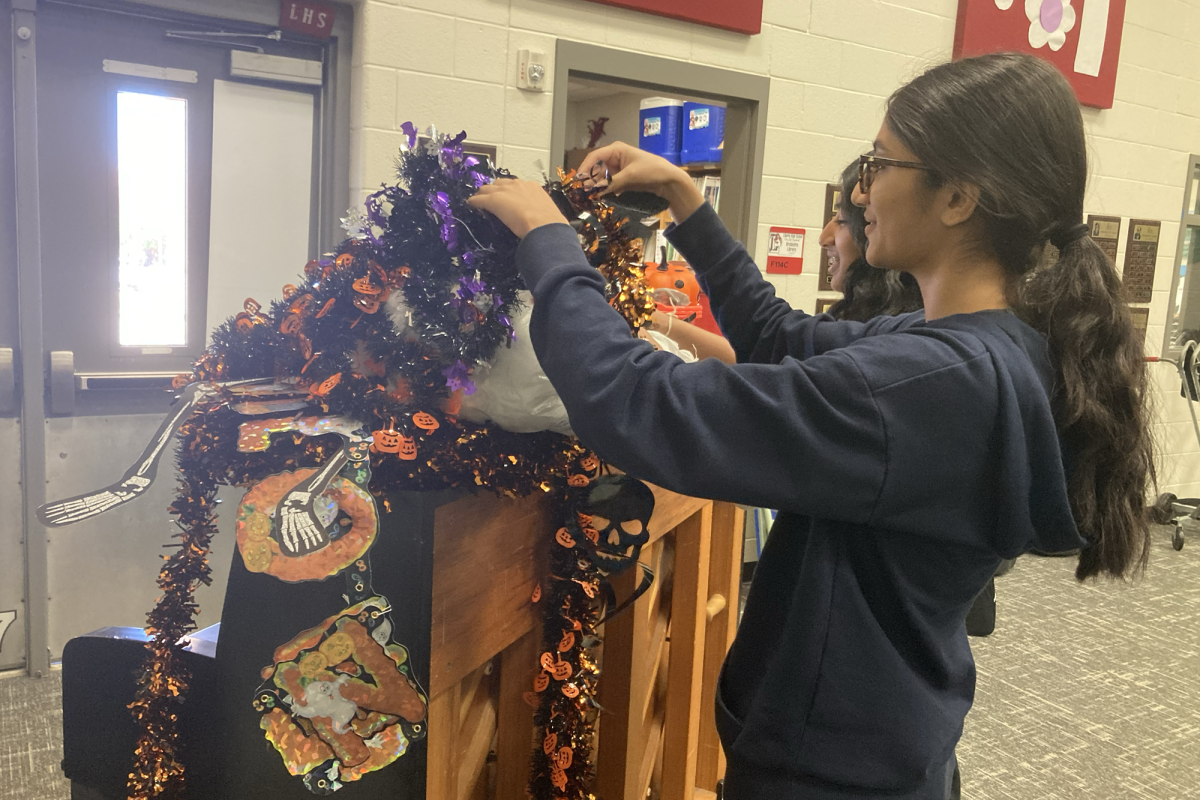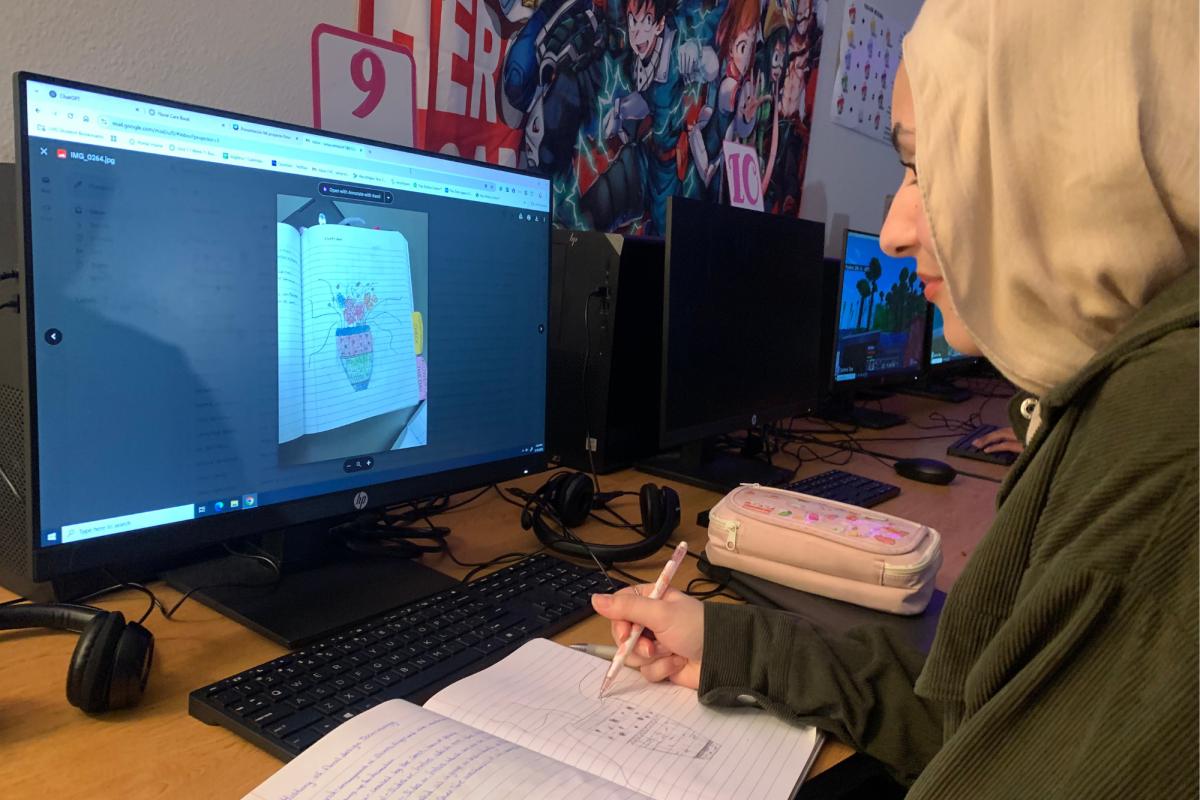

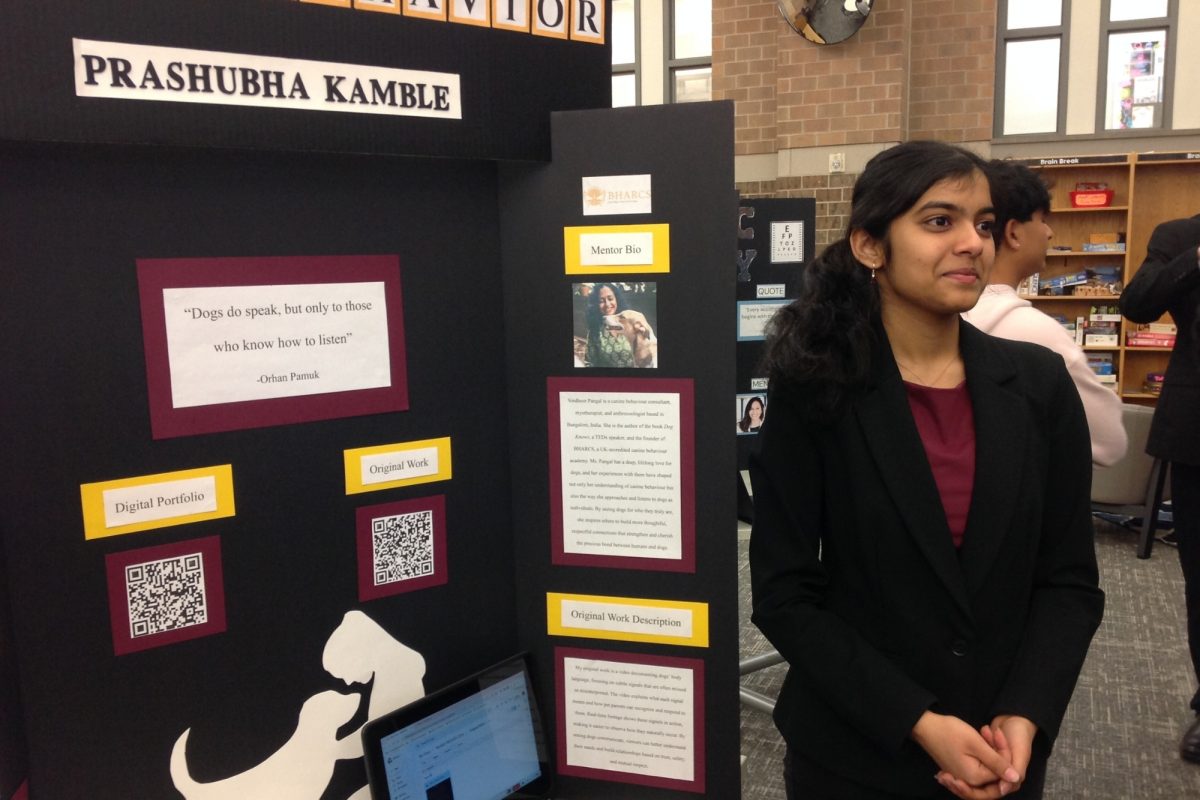
Independent Study and Mentorship students presented their research portfolios on Wednesday in the library with students and staff able to walk through the gallery and see the student’s work.
“Students have spent the semester conducting in-depth research, interviewing professionals in their fields, and building their research portfolios,” ISM teacher Courtney Benson said. “For the gallery walk, their research is generally presented via professional display boards that summarize their methodology and key findings.”
The gallery walk allowed both the presenters and the attendees to learn and grow, in the eyes of senior Saanvi Patel.
“I think gallery walk was really successful,” Patel said. “It was great seeing everyone come in and ask questions about our topics and original work. I think everyone was able to get something out of it, whether it were the ISM students gaining professional communication skills or the people coming in and learning something new.”
Learning to keep audiences engaged was the key for some students, and for attendee senior Chinmay Patil, the focus on many projects on younger populations allowed audiences to connect to the topics and stay engaged.
“I personally liked seeing a lot of the projects designed to help the younger population with their health and education,” Patil said.
The gallery walk was a chance for students to practice for the upcoming final ISM Showcase at the Comerica Center.
“I learned how to clearly express and introduce the basics of my topic and also what questions I expect to see during the ISM showcase which will be held on January 29th,” senior Prashubha Kamble said. “The attendees learned not just about our topics and research, but they asked plentiful questions about the ISM program as well. Students got a chance to see a glimpse of what ISM could be like if they were to take it.”
ISM students are given the flexibility to choose their own research topics, making the project a personal one to students.
“I think I learned that, though something might be really intimidating at the start, as you start to learn more about it, it becomes something that’s second nature to you,” senior Samriddhi Parashar said. “I also think that, with a topic like mine (special education), it can be really easy for people to make fun of it or essentially think of it as a joke, especially because society has weird expectations and can be really insensitive. Even though it might not be that important to other people, it was important to me, and I decided I wanted to change something; in my eyes, that’s really all that matters.”